Here
are some wonderful and never seen before nature creatures under the sea.
Silent
scream
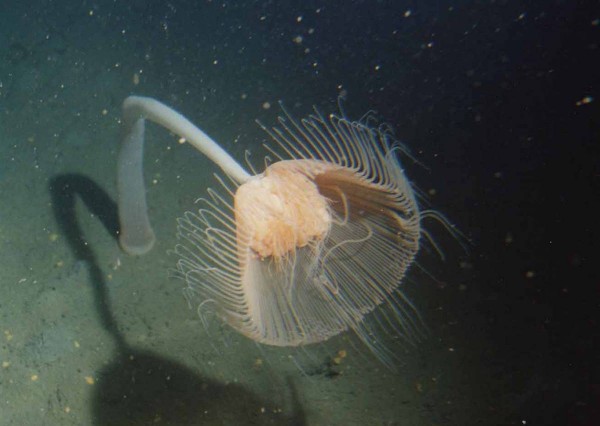
When attacked by a predator, this deep-sea jellyfish (Atolla
wyvillei) uses bioluminescence to “scream” for help. The amazing light show is
known as a burglar alarm display. This jellyfish was photographed by the ROV
Hyper Dolphin east of Japan’s Izu-Oshima Island, 2,640 feet (805 meters) below
the surface.

Octopus
in the Gulf
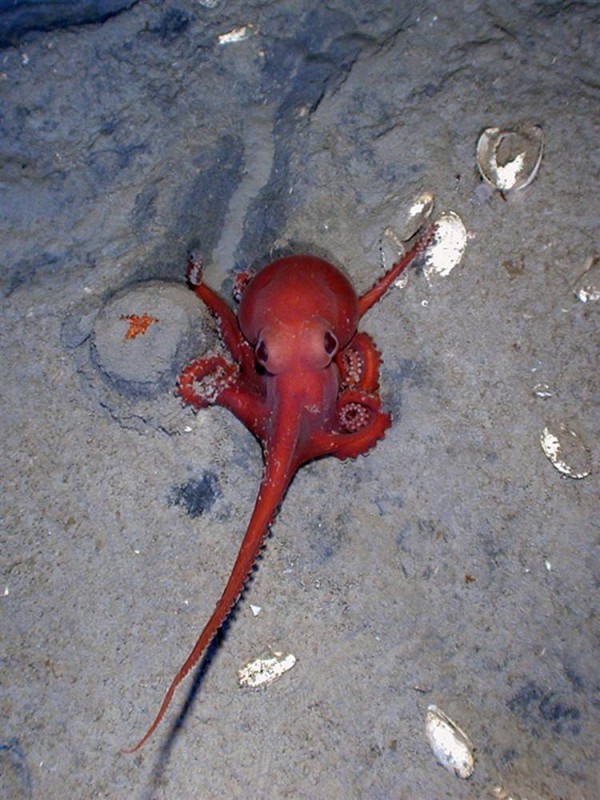
A deep-water octopus (Benthoctopus sp.) sits on the seafloo in the
Gulf of Mexico’s Alaminos Canyon, about 8800 feet (2700 meters) beneath the sea
surface.
Neighbor
to an oil rig
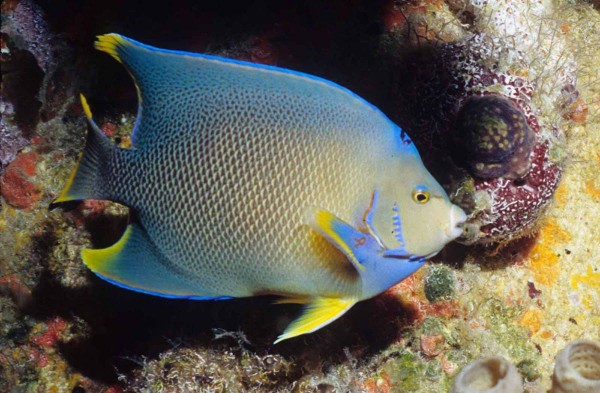
This queen angelfish (Holacanthus ciliaris) was spotted near an oil
rig in the Gulf waters off the coast of Texas.
Cooper
of the Sea
This Gulf of Mexico amphipod, Phronoma sedentaria, is known as the
“Cooper of the Sea” because the crustacean species lives inside a barrel-shaped
creature known as a salp, also shown here.

King
of the hydroids
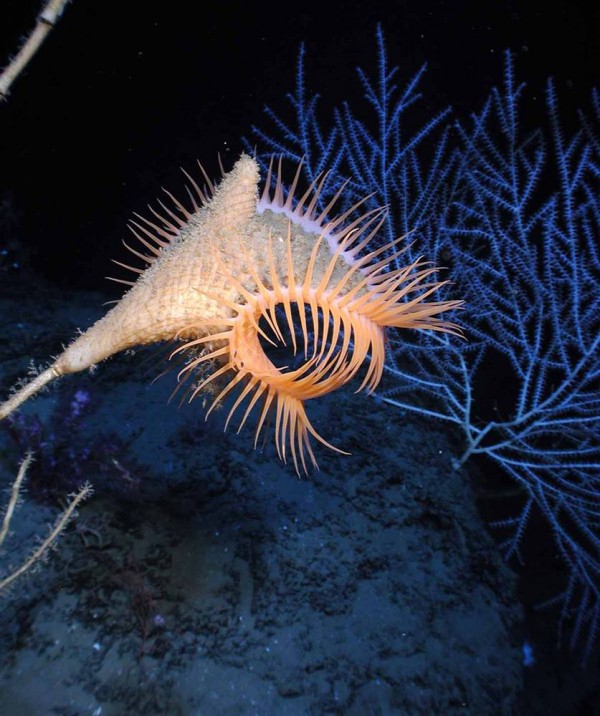
Branchiocerianthus imperator is the largest known type of solitary
hydroid. Hydroids look like flowers, but they’re actually animals with
tentacles. This one was spotted by the HOV Shinkai 2000 in Japan’s Sagami Bay at
a depth of 2,200 feet (670 meters).
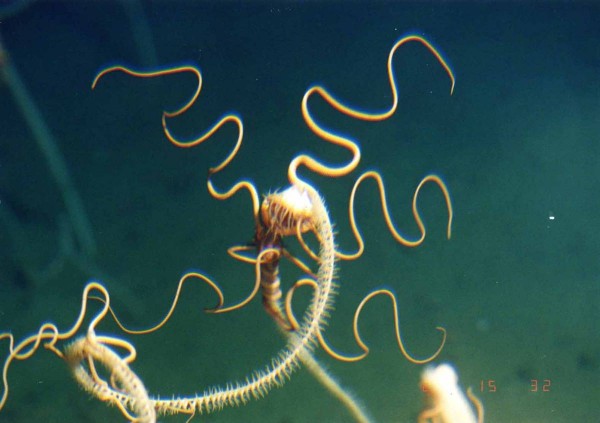
Star
of the sea
Asteronyx loveni is a type of brittle star that tends to cling onto
another marine species known as the sea pen. This brittle star was spotted with
its arms flung wide in Japanese waters off Sanriku, at a depth of 4,150 feet
(1,265 meters).
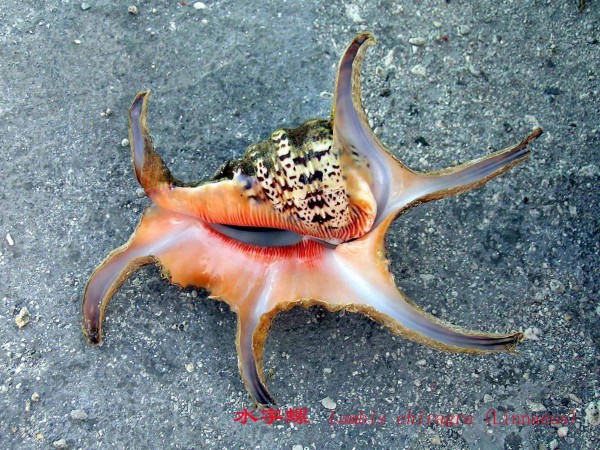
Spiky
spider
The spider conch (Lambis chiragra) has six spines on the lip of its
shell. The shell’s pearly interior displays beautiful tints of orange and
yellow. The species is listed as “vulnerable” on the Red List of threatened
animals of Singapore.
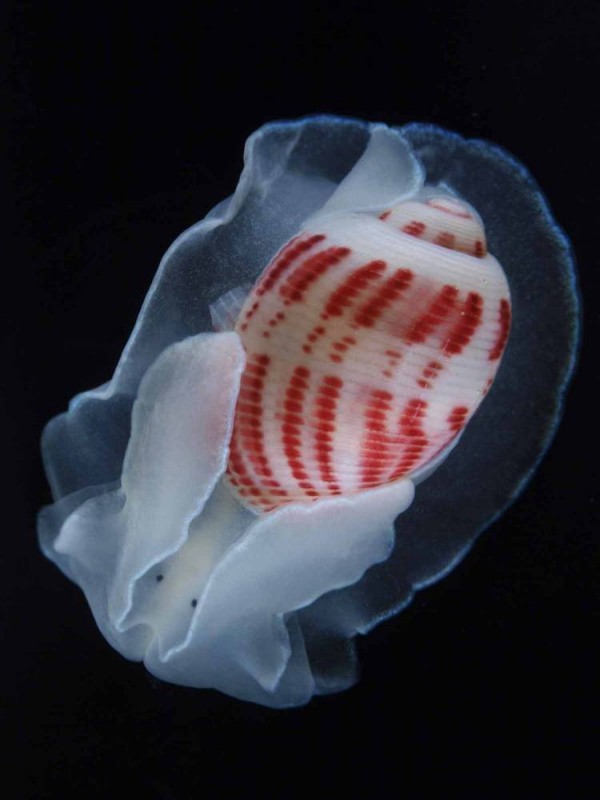
Paper
bubble
This red-lined paper bubble (Hydatinidae gen. sp.) was
discovered in a sperm whale carcass in the Kagoshima whale fall, off Japan’s
Cape Nomamisaki. The gastropod’s tiny eyes are protected by cephalic shields.
The “paper bubble” is actually an extremely thin shell.
Dangerous
beauty
The giant Caribbean anemone (Condylactis gigantea) grows to a
height of about 6 inches (15 centimeters). Its tentacles are beautiful … but
they contain toxin-bearing nematocysts that paralyze the sea anemone’s prey.

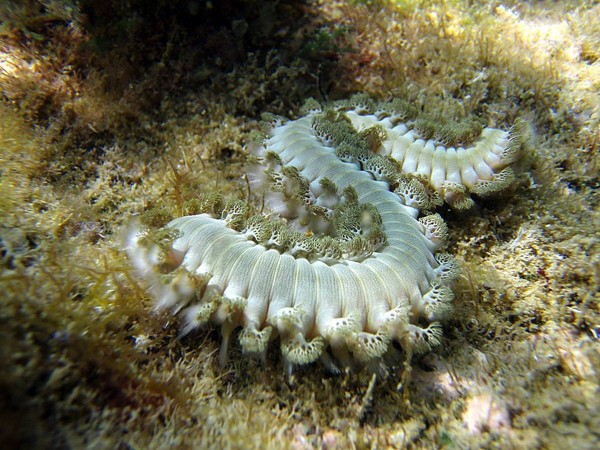
Fire
in water
The bearded fireworm (Hermodice carunculata) is a type of
bristleworm, with groups of white bristles along each side. The venom-filled
bristles easily penetrate the flesh and break off if this worm is handled. They
produce an intense burning sensation in the area of contact, hence the common
name of the Caribbean species.
Spongebob’s
buddy
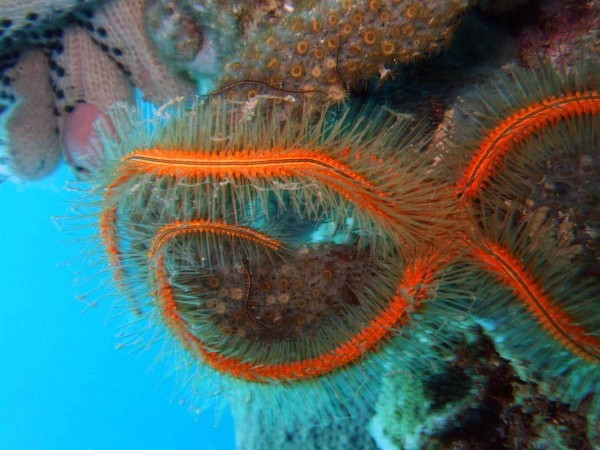
These nocturnal echinoderms (Ophiothrix suesonii) are called sponge
brittle stars. They are very common in the Caribbean. They are so named because
they are found exclusively either inside or outside living sponges.
What
big teeth!
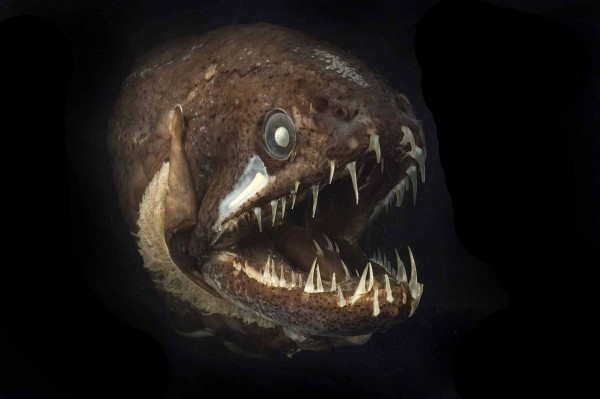
Imagine living in the sea where it is permanently dark, cold, and
food is hard to find. For many animals at depth, it may be weeks to months
between meals. If you find something to eat, you have to hang on to it. This is
why so many deep-sea fishes have lots of big teeth. This dragonfish, spotted off
the coast of Australia, even has teeth on its tongue. They would be terrifying
animals … if they weren’t the size of a banana.
Fish
with a lure
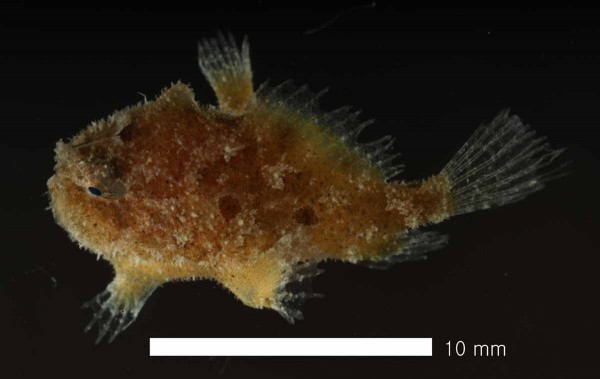
The sargassumfish (Histrio histrio) is a member of the frogfish
family (Antennariidae), a group of small, globular fishes with stalked,
grasping, limblike pectoral fins with small gill openings behind the base, a
trapdoor-like mouth high on the head, and a “fishing lure” (formed by the first
dorsal spine) on the snout. It typically lives in open waters in close
association with floating sargassum weed (Sargassum natans and S. fluitans) but
is frequently blown into nearshore and bay waters during storms. This specimen
was found off the coast of Korea.
Kooky
cucumber
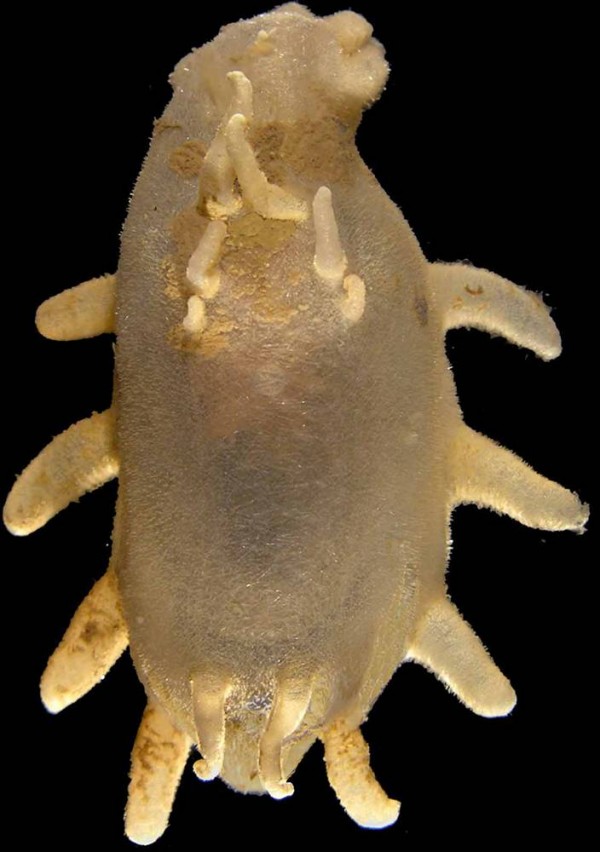
This newly discovered sea cucumber species, Elpidia belyaevi, was
first found in the Arctic deep sea.
 این وب هر روز حداقل یه بار به روز میشه...مشتری دائمی مطالب این وب بمونید !